MATH 7310 • Real Analysis and Linear Spaces I
Gibbs measures, arctic curves, and random interfaces
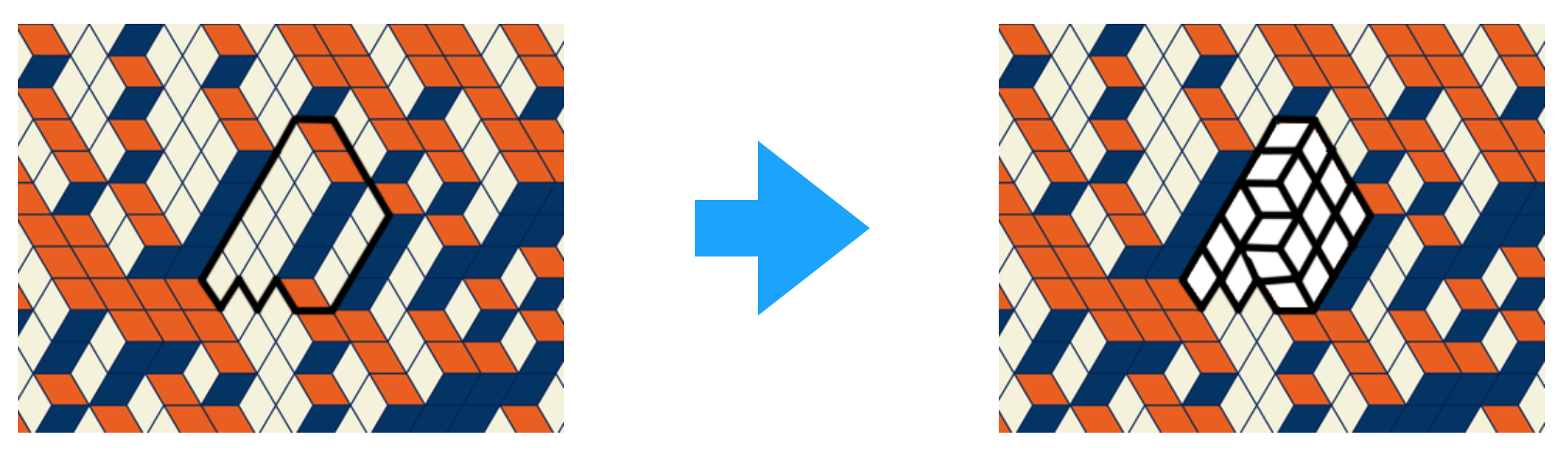
This talk outlines connections between 2-dimensional Gibbs measures with a height function and particle systems in the Kardar-Parisi-Zhang universality class.
The q-Hahn PushTASEP
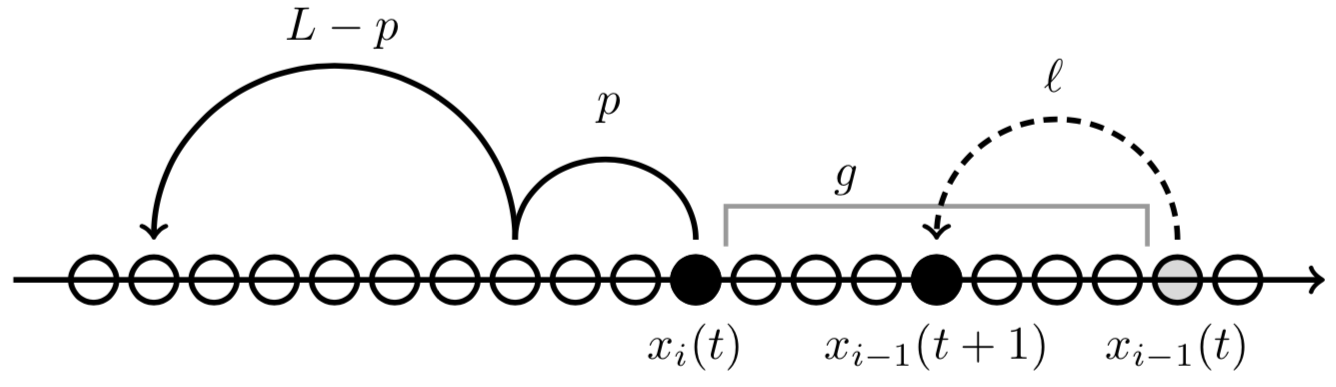
We introduce the $q$-Hahn PushTASEP — an integrable stochastic interacting particle system which is a 3-parameter generalization of the PushTASEP, a well-known close relative of the TASEP (Totally Asymmetric Simple Exclusion Process). The transition probabilities in the $q$-Hahn PushTASEP are expressed through the $_4\phi_3$ basic hypergeometric function. Under suitable limits, the $q$-Hahn PushTASEP degenerates to all known integrable (1+1)-dimensional stochastic systems with a pushing mechanism. One can thus view our new system as a pushing counterpart of the $q$-Hahn TASEP introduced by Povolotsky. We establish Markov duality relations and contour integral formulas for the $q$-Hahn PushTASEP. We also take a $q\to1$ limit of our process arriving at a new beta polymer-like model.

Virginia Integrable Probability Summer School
Generalizations of TASEP in discrete and continuous inhomogeneous space
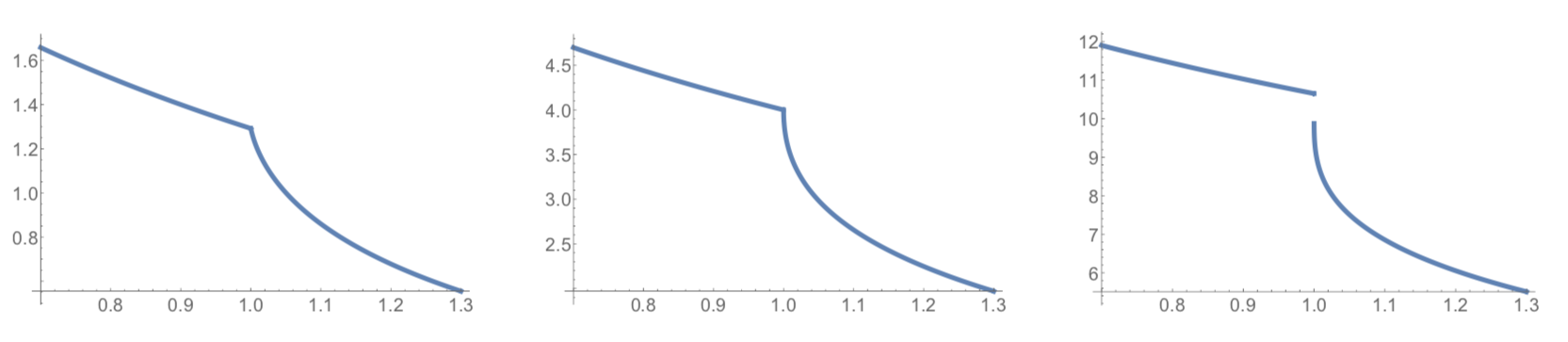
We investigate a rich new class of exactly solvable particle systems generalizing the Totally Asymmetric Simple Exclusion Process (TASEP). Our particle systems can be thought of as new exactly solvable examples of tandem queues, directed first- or last passage percolation models, or Robinson-Schensted-Knuth type systems with random input. One of the novel features of the particle systems is the presence of spatial inhomogeneity which can lead to the formation of traffic jams.
Workshop on Representation Theory, Combinatorics, and Geometry
MATH 3100 • Introduction to Probability (2 sections)
2019 travel
January
8-10 • Moscow, Russia • Conference “New Frontiers in Representation Theory” dedicated to the 70th birthday of G.I.Olshanski, at SkolTech Center for Advances Studies
31-1 • Minneapolis, MN • University of Minnesota